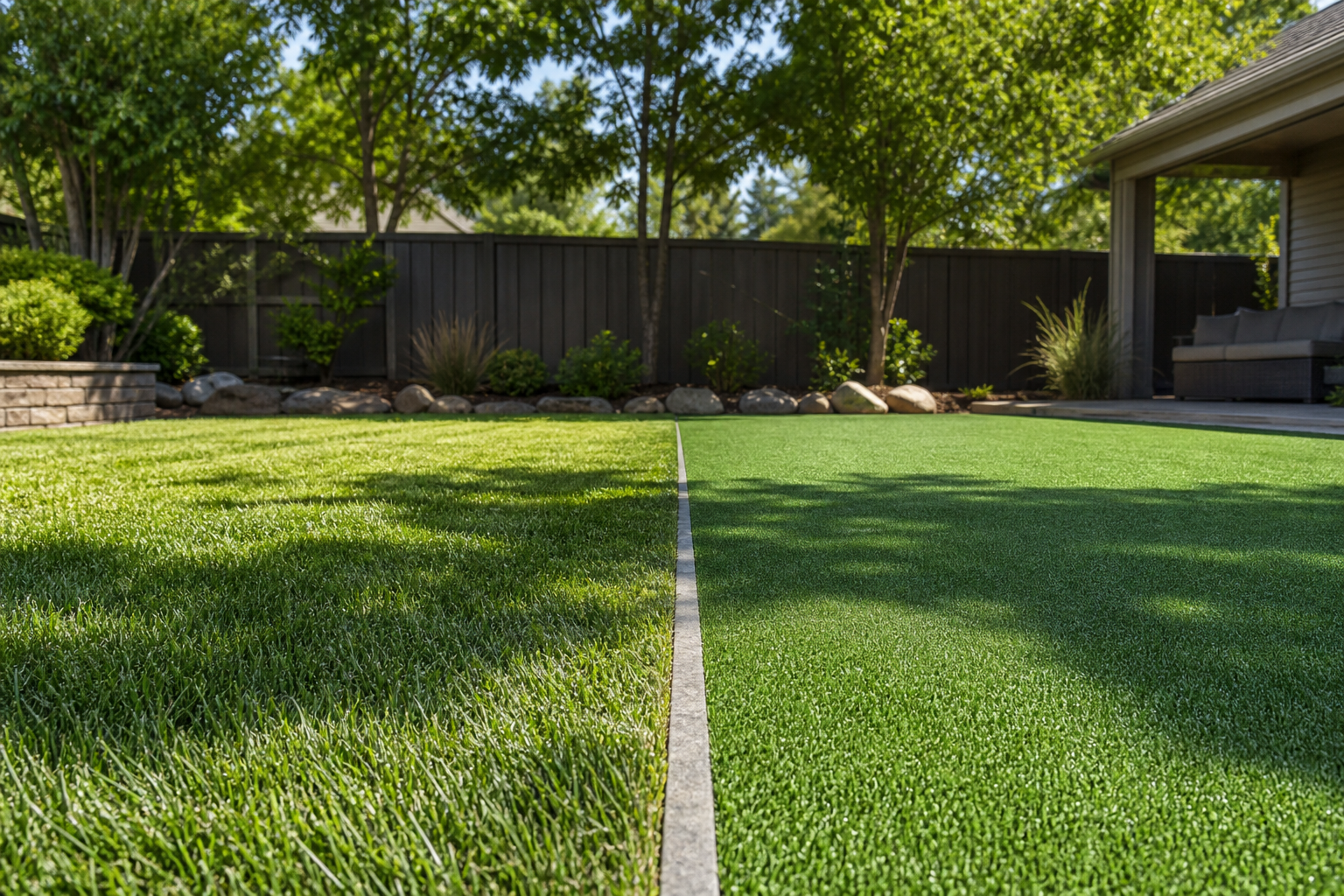
Which is better: artificial turf vs natural grass for your Henderson backyard?
There is no single winner. Artificial turf often wins for low regular upkeep and heavy use, while natural grass often wins for a cooler surface and a living, natural feel. Which is better depends on your priorities: maintenance time, water availability, how you use the yard, and local climate or regulations in Henderson, NV.
Quick decision guide
- Choose artificial turf if you want minimal mowing, reliable all-weather play surfaces, and limited ongoing irrigation.
- Choose natural grass if you prioritize natural cooling, soil health, pollinators, and a softer, living surface.
- Consider a hybrid approach for mixed needs: artificial turf in high-traffic play areas and natural grass or planting beds elsewhere.
Pros and cons at a glance
Artificial turfs
- Pros: low routine maintenance, no mowing, reduced water use after installation, consistent appearance, durable in high-traffic spots.
- Cons: higher upfront installation cost, surface can heat up in sun, limited support for soil life and biodiversity, requires proper base and drainage, periodic rinsing and grooming needed.
Natural grass
- Pros: cooler surface in direct sun, softer underfoot, a living landscape, and typically lower initial cost to seed or sod.
- Cons: regular mowing and fertilizing, seasonal variability, irrigation needs in dry periods, damage from heavy or constant use.
Key factors to weigh for your backyard
1. Maintenance time and skills
If you prefer low weekly effort, artificial turf reduces recurring chores. Natural grass requires mowing, edging, seasonal care, and spot repairs. Consider who will do the work or whether you will hire help.
2. Water and local rules
Water availability and local irrigation restrictions in Henderson can change the cost and feasibility of keeping a healthy natural lawn. Artificial turf reduces long term watering but does not eliminate occasional rinsing and cleaning.
3. Heat and comfort
Artificial turf can become noticeably warmer than natural grass under direct sun. If your yard gets intense sun, plan shading, cooling strategies, or lighter-colored infill options and ask installers about heat-reducing materials.
4. Pets and children
Both surfaces are usable for pets and kids but require different care. Artificial turf needs routine cleaning and odor management; choose permeable systems and non-toxic infill. Natural grass usually stays cooler and feels softer underfoot, but it can get muddy and worn in play zones.
5. Drainage and soil
Artificial turf installations require a stable base and proper drainage to avoid pooling. Natural grass needs soil assessment for compaction and grading to ensure proper runoff. If you have known drainage issues, address those before changing surfaces.
6. Environmental tradeoffs
Natural grass provides a living surface and helps cool the immediate area, but it may require substantial irrigation, mowing, and lawn-care products. Artificial turf can reduce irrigation and mowing, but it does not support living soil at the surface and may increase surface temperatures. Native planting beds or permeable hardscape can help balance these tradeoffs.
How to compare costs sensibly
- Estimate upfront costs: turf materials, base preparation and installation versus sod or seed and soil amendments.
- Estimate ongoing costs: water, mowing, fertilizing, pest control for grass; cleaning, occasional infill topping, and repairs for turf.
- Factor in lifespan and replacement: premium turf can last many years but will eventually need replacement; grass requires regular reseeding and patching in high-use areas.
- Include indirect costs: time you spend on maintenance, equipment, and potential cooling or landscaping changes.
Practical steps to decide for your yard
- List your priorities: low maintenance, kids play, pet needs, water savings, look and feel, biodiversity, resale preferences.
- Walk the yard at different times of day: note sun exposure, shade, drainage paths, and where wear occurs.
- Get at least two local assessments: ask contractors or landscapers about drainage, site prep, and realistic longevity for both options.
- Ask for samples and a breakdown of materials, base systems, permeability, and a written maintenance plan.
- Consider a mixed plan: turf in the dog run or play area; natural grass or planting beds in quieter zones to support pollinators and cooling.
Maintenance basics
Natural grass: follow local horticultural guidance for the grass type you choose; monitor soil moisture, aerate compacted areas, and repair worn spots promptly.
Artificial turf: schedule periodic rinsing, remove debris, brush fibers back upright, and follow recommendations for pet waste cleanup. Confirm product-specific maintenance with the installer or manufacturer.
Questions to ask before you invest
- What is the expected lifespan and who is responsible for repairs? Request documentation.
- How does the proposed system handle heavy rain and drainage?
- What maintenance is required year by year and what are typical costs?
- Can I see recent local installations and speak to references?
Deciding between artificial turf vs natural grass for a Henderson backyard comes down to how you use the space, how much maintenance you want, and local water or climate constraints. If you want help applying these points to your property, contact Vegas Valley Turf for project-specific guidance or a quote; call 702-789-2500.